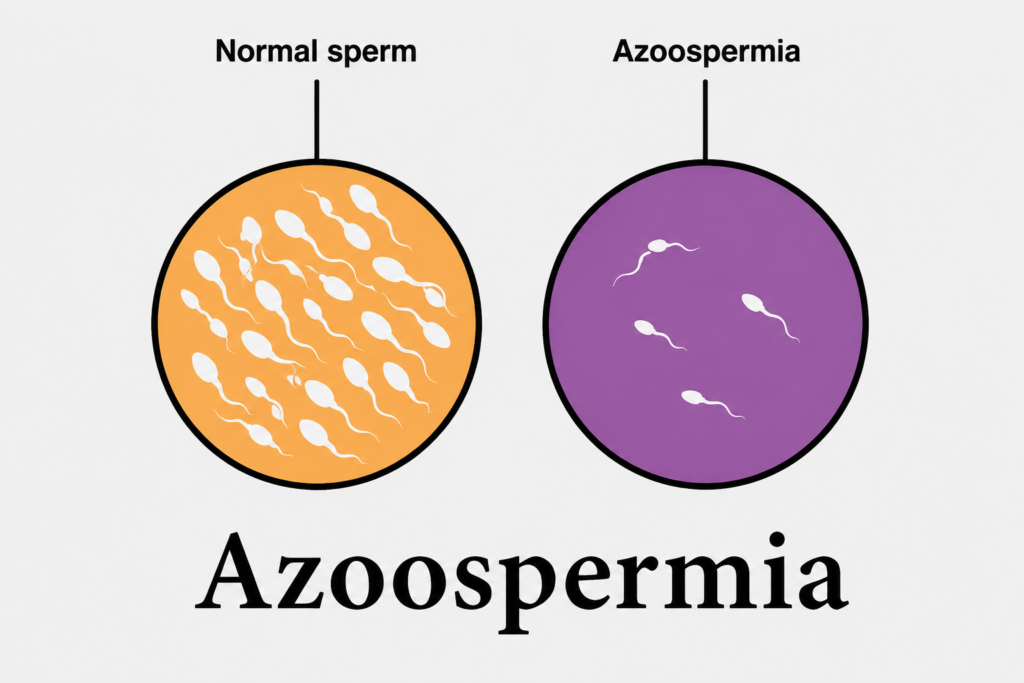
Azoospermia simply means the absence of sperm in the semen. It is one of the common causes of male infertility and can make natural conception difficult. But azoospermia does not always mean infertility is permanent. In many cases, sperm can still be retrieved with specialized fertility procedures, giving couples a chance to conceive successfully.
Azoospermia treatment is suitable for men diagnosed with no sperm in the semen and couples facing difficulty in conceiving naturally. It may also help men with hormonal issues, testicular conditions, or those planning IVF/ICSI treatment.
Obstructive azoospermia occurs when sperm production is normal, but a blockage prevents sperm from mixing with the semen. Common causes include infections, vasectomy, injury, or previous surgery.
Non-obstructive azoospermia happens when the testicles produce little or no sperm due to hormonal, genetic, or medical conditions. Advanced fertility treatments may help retrieve sperm in some cases.

The fertility specialist evaluates the patient’s medical history, semen analysis reports, and overall reproductive health before recommending TESA treatment.
Local anesthesia is given to ensure the procedure is comfortable and causes minimal pain or discomfort.
A fine needle is carefully inserted into the testicular tissue to retrieve fluid and tissue samples containing sperm.
The collected sample is immediately examined under a microscope to identify and isolate healthy sperm cells.
The aspirated fluid is collected safely and transferred to the laboratory for examination.
Embryologists examine the sample under a microscope to identify healthy and viable sperm.
Retrieved sperm is used immediately or preserved for assisted fertility treatments like IVF or ICSI.
The patient is discharged after a short recovery period and follow-up guidance is provided for further fertility planning.
Medications and hormone-based treatments help correct hormonal imbalances that may affect sperm production and overall male fertility.
Surgical procedures may be recommended to remove blockages in the reproductive tract and restore the normal flow of sperm into the semen.
Advanced techniques like TESA, PESA, and Micro-TESE are used to retrieve healthy sperm directly from the testicular tissue for fertility treatment.
Retrieved sperm can be used in IVF and ICSI procedures, helping couples improve their chances of successful fertilization and pregnancy.
Doctors may recommend healthy lifestyle changes, nutritional guidance, and ongoing fertility care to support reproductive health and treatment outcomes.
Micro-TESE (Microsurgical Testicular Sperm Extraction) is an advanced surgical procedure used to retrieve sperm directly from the testicular tissue using a high-powered microscope.
This treatment is especially helpful for men with non-obstructive azoospermia or severe male infertility. At Isha Women’s Hospital, we provide advanced Micro-TESE treatment with expert fertility care.
TESA (Testicular Sperm Aspiration) and PESA (Percutaneous Epididymal Sperm Aspiration) are minimally invasive procedures commonly used in cases of obstructive azoospermia.
These techniques help retrieve sperm that can later be used for IVF or ICSI treatment.
ICSI (Intracytoplasmic Sperm Injection) is a highly advanced fertility treatment in which a single healthy sperm is injected directly into the egg for fertilization.
ICSI is widely recommended for severe male infertility and azoospermia cases because it significantly improves the chances of fertilization and pregnancy.
Sperm freezing treatment costs generally include the initial fertility consultation, semen analysis, sperm collection procedure, laboratory processing, cryopreservation, and storage charges. The total cost may vary depending on the number of samples stored, freezing technology used, and storage duration selected by the patient.
The total sperm freezing cost is usually divided into fertility assessment, semen analysis, sperm preparation and washing, cryopreservation procedure, laboratory handling, and annual storage fees. Advanced laboratory techniques help preserve sperm quality and improve future fertility treatment outcomes.
Additional charges may apply for advanced semen testing, viral marker screening, multiple sample collections, extended storage duration, emergency freezing procedures, or future fertility treatments such as IUI, IVF, or ICSI using frozen sperm samples. Costs may vary based on individual treatment needs.
The overall sperm freezing cost can be influenced by semen quality, number of samples collected, storage duration, laboratory infrastructure, fertility specialist expertise, and additional fertility evaluations required before the procedure. The type of cryopreservation technology used may also impact pricing.
Selecting suitable storage plans, understanding package inclusions, freezing samples early when sperm quality is better, and discussing transparent pricing options with fertility specialists can help optimize overall sperm freezing costs while ensuring safe and reliable fertility preservation.
At Isha Women Hospital, fertility care includes advanced evaluation, DNA fragmentation testing, and personalized treatment for both male and female fertility concerns. Our specialists ensure accurate diagnosis and comprehensive reproductive health management.
We also offer continuous monitoring, fertility counseling, and customized care based on each patient’s needs and long-term fertility goals, ensuring complete support throughout the treatment journey.
At Isha Women Hospital, fertility care is based on advanced evaluation, DNA fragmentation assessment, and personalized treatment planning for both male and female fertility concerns. Our specialists focus on accurate diagnosis and comprehensive reproductive health management.
We provide fertility-focused counseling, continuous monitoring, and customized care according to each patient’s reproductive health needs and long-term fertility goals, ensuring structured and supportive treatment at every stage.
Yes, many cases of azoospermia can be treated successfully depending on the underlying cause and the patient’s condition.
Yes. Advanced fertility treatments such as Micro-TESE and ICSI have helped many men with zero sperm count become biological fathers.
Not always. Some cases are temporary and may improve with medication, lifestyle changes, or surgery.
The best treatment depends on whether the condition is obstructive or non-obstructive. A fertility specialist will recommend the most suitable option after a detailed evaluation.

If you or your partner are struggling with male infertility or have been diagnosed with azoospermia, expert care is available at Isha Women’s Hospital.
With advanced fertility treatments, modern technology, and compassionate support, we are here to help you take the next step toward your dream of parenthood.